

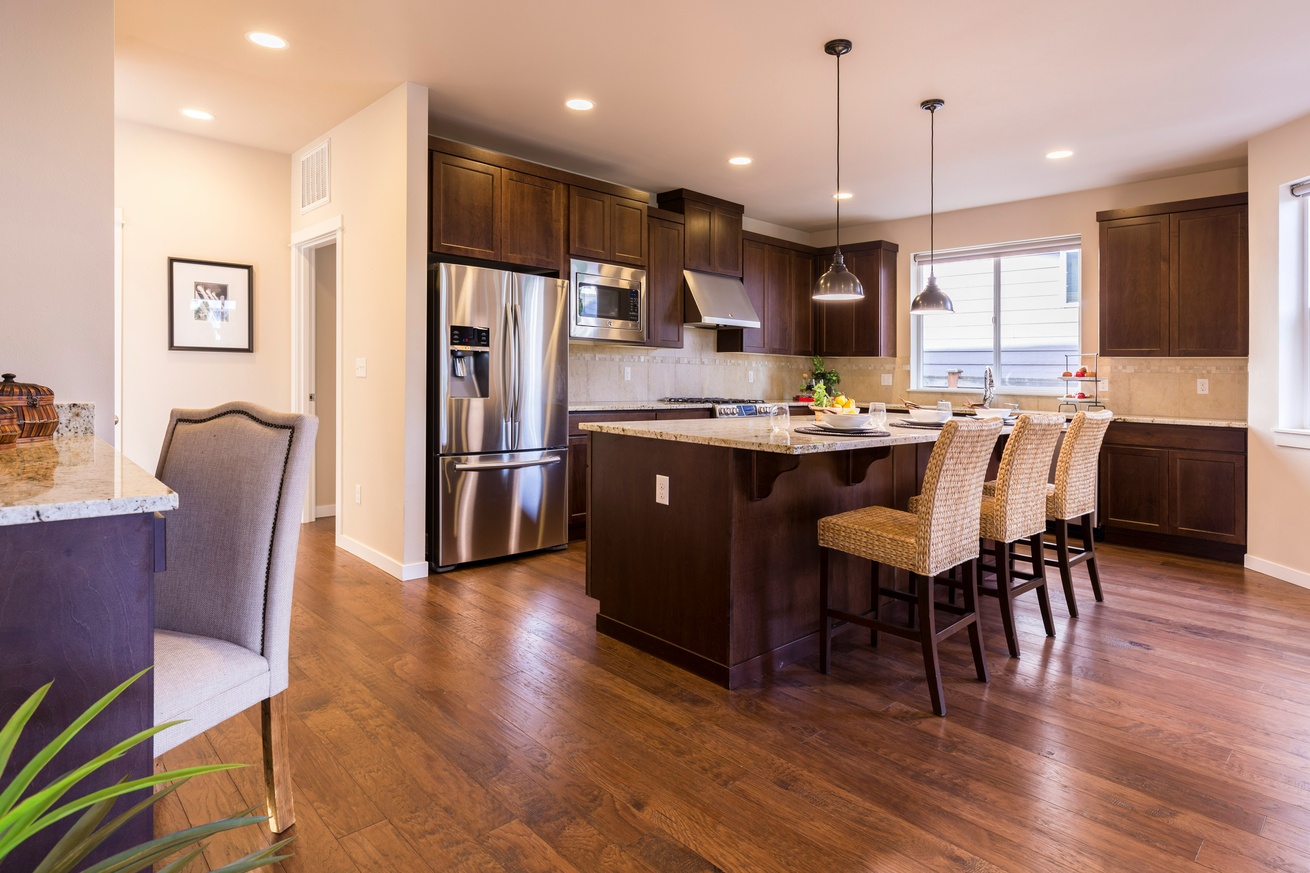
Kitchens are busy. They deal with spills, dropped pans, muddy shoes, pet traffic, and constant movement from morning coffee to late-night cleanup. That is exactly why many homeowners across Beaufort and the surrounding Lowcountry wonder if engineered hardwood flooring can actually hold up in a kitchen.
The short answer is yes. Engineered hardwood flooring can absolutely be installed in kitchens when the right product is selected and installed correctly. In fact, many homeowners today choose engineered wood specifically because it handles moisture and humidity better than traditional solid hardwood.
Homeowners often want a floor that feels warm and timeless without sacrificing practicality. Engineered wood flooring gives people that balance. It delivers the natural beauty of wood while standing up better to changing indoor conditions that are common in coastal South Carolina homes.
What is engineered hardwood flooring?
Engineered hardwood flooring is real wood flooring, but its construction is different from solid hardwood. Instead of being made from one thick piece of lumber, engineered wood uses multiple layers.
The top layer is genuine hardwood veneer. Underneath that are layered plywood or high-density core materials designed to improve stability.
That layered structure matters. Kitchens experience swings in humidity and temperature almost every day. Steam from cooking, dishwasher moisture, and occasional spills can cause flooring materials to expand and contract. Engineered wood flooring is built to resist that movement better than many traditional hardwood options.
For Lowcountry homes near the coast, this added stability can make a noticeable difference over time.
Why do homeowners install engineered hardwood in kitchens?
Many people want continuity throughout the home. They do not want the kitchen to feel disconnected from nearby living rooms, dining rooms, or hallways.
Engineered wood flooring creates a smoother visual flow. Open-concept homes especially benefit from this look.
But appearance is only part of the reason.
Homeowners also choose engineered hardwood because it offers:
Real wood texture and character
Better dimensional stability than solid hardwood
A softer, warmer feel underfoot than tile
Strong resale appeal
Wide design flexibility
Compatibility with many installation methods
Today’s engineered hardwood floors also come in a huge range of styles. Some homeowners want light white oak visuals that brighten coastal interiors. Others prefer darker rustic planks with heavy grain patterns that hide wear more easily.
At Southern Carpet Wholesale, the showroom is constantly updated with newer styles and finishes so homeowners can compare options side by side instead of guessing from tiny samples online.
Is engineered hardwood flooring waterproof?
No. Engineered wood flooring is not waterproof. That is one of the most important things homeowners should understand before installing it in a kitchen.
However, many engineered hardwood products are more moisture-resistant than traditional solid hardwood flooring. There is a major difference between moisture resistance and complete waterproof protection.
Small spills are usually not a problem if cleaned quickly. A dropped ice cube, splashed sink water, or minor cooking mess typically will not damage a properly sealed engineered hardwood floor.
Long-term standing water is different.
Leaks from dishwashers, refrigerator lines, or plumbing problems can still cause damage if moisture sits too long. That is why quick cleanup and routine maintenance matter.
For homeowners who want the appearance of wood with even stronger water protection, waterproof luxury vinyl plank may also be worth considering. Southern Carpet Wholesale stocks thousands of feet of waterproof vinyl flooring for exactly this reason.
Still, many homeowners continue choosing engineered hardwood because nothing fully duplicates the natural warmth and texture of real wood.
What type of engineered hardwood flooring works best in kitchens?
Not every engineered wood flooring product performs the same way.
Some products are built specifically for high-traffic environments and active households. Others are designed more for appearance than durability.
Here are a few things homeowners should pay attention to when shopping for engineered hardwood kitchen flooring.
Wear layer thickness: The wear layer is the real hardwood surface on top. Thicker wear layers generally provide better long-term durability and may allow refinishing later.
Finish type: Strong factory finishes help protect against scratches, stains, and wear. Matte finishes are especially popular because they help hide small scratches and footprints.
Wood species: Harder species like oak, maple, and hickory tend to perform better in busy kitchens than softer woods.
Plank width: Wider planks create a modern appearance, but narrower planks sometimes handle expansion and contraction more effectively in humid environments.
Core construction: Higher-quality plywood cores often provide greater stability than lower-end materials.
This is where working with an experienced flooring team becomes valuable. Homeowners often focus entirely on color while overlooking performance details that matter in real-life kitchen use.
Can engineered hardwood flooring handle Lowcountry humidity?
Yes, and that is actually one of its biggest advantages.
Coastal South Carolina homes regularly deal with elevated humidity levels. Areas like Port Royal, Fripp Island, and Saint Helena Island experience moisture-heavy air throughout much of the year.
Solid hardwood naturally expands and contracts more dramatically in those conditions.
Engineered wood flooring was developed to reduce that movement. Its layered construction creates more structural stability, which makes it a smart option for many coastal homes.
That does not mean humidity should be ignored entirely. Maintaining indoor humidity levels and proper HVAC use still helps protect any wood flooring investment.
How should engineered hardwood flooring be maintained in kitchens?
Maintenance is usually simpler than many homeowners expect.
A few smart habits go a long way toward preserving the floor’s appearance.
Clean spills quickly: Do not let water sit on the surface for long periods.
Use felt pads under furniture: Kitchen chairs can create scratches over time without protection.
Sweep regularly: Small dirt particles can act like sandpaper under foot traffic.
Avoid soaking wet mops: Use manufacturer-approved hardwood floor cleaners instead.
Place mats strategically: Rugs near sinks and entry points can help reduce moisture exposure.
Most homeowners find engineered hardwood surprisingly manageable once they understand basic care routines.
Your home for top-quality engineered wood flooring in Beaufort, SC
Southern Carpet Wholesale has served the Lowcountry since 2002 with a focus on honest service, product knowledge, and everyday low prices. As a family-owned flooring company in Beaufort, SC, our team helps homeowners compare real options based on how people actually live.
Whether you are remodeling a kitchen, updating a rental property, or building a new home, engineered hardwood flooring may be an excellent fit when selected carefully and installed properly. We serve throughout Beaufort, Laurel Bay, Saint Helena Island, Port Royal, Parris Island, Bluffton, Fripp Island, Okatie, and Hilton Head Island, SC. Get in touch with us today!


